

Gratitude can be a way of noticing something you value during a difficult day. It does not require you to feel grateful for harm, overlook a problem or replace stress with a positive emotion.
These five options offer a gentle starting point. Choose one that feels useful, change it or leave the exercise aside. There is no daily quota of enjoyable moments you have to meet.
1. Start with what needs care today
Before making a list, consider whether something practical needs attention: food, rest, privacy, company, help with a task or support with a difficult situation. An appreciation exercise does not have to come before those needs.
The National Institute of Mental Health’s self-care guide includes setting priorities and staying connected with people who can offer support. You can make room for a small pleasant moment while also taking a problem seriously and asking for help.

2. Choose one ordinary thing you might welcome
Think of something you enjoy for its own sake, rather than something that is supposed to make you productive or impressive. It could be an activity, a comfortable detail or a brief connection with someone.
Possible starting points include listening to a favourite song, tending a plant, reading a page, enjoying a drink, watching the light change or receiving a kind message. Choose what suits your access, energy and preferences. You do not have to select ten things or do them all today.
3. Use a form of reflection that suits you
You might think about the moment, write one sentence, describe it to someone or simply pause to notice it. A notebook is optional. If you record something privately, choose a place or method you are comfortable using.
Keep the note specific if that helps. For example, “I appreciated the quiet during my break” describes one experience without making a claim about the whole day. You can also notice what made the moment possible, such as an adjustment you requested or help someone offered.
4. Let difficult feelings remain part of the picture
Appreciation can coexist with frustration, grief, anger or worry. You do not need to use a positive detail to argue yourself out of an emotion or prove that your circumstances are acceptable.
If the exercise brings guilt or feels forced, stop or try a neutral observation instead: what you noticed, what you needed or what you would like to change. Not feeling grateful at a particular moment does not make you an ungrateful person. You are allowed to leave the page blank.
5. Review what is useful without turning it into a score
After trying an option, ask whether it felt welcome and whether you would choose it again. A shorter reflection, a different activity or no regular schedule may suit you better than a fixed daily routine.
You can also turn an observation into a practical request, such as asking for another short break or making time for a conversation. If stress or distress is disrupting everyday life, consider speaking with a health professional or another appropriate support service. You do not have to manage persistent difficulties with a gratitude list alone.
When you want to write but positive words feel false
Try writing one factual line, such as “My neighbour carried the delivery upstairs today.” You can also write what is still difficult and what you might ask for tomorrow.
If reflecting on gratitude feels like another demand, skip it and use the time for rest or a practical task.
Read the infographic in text
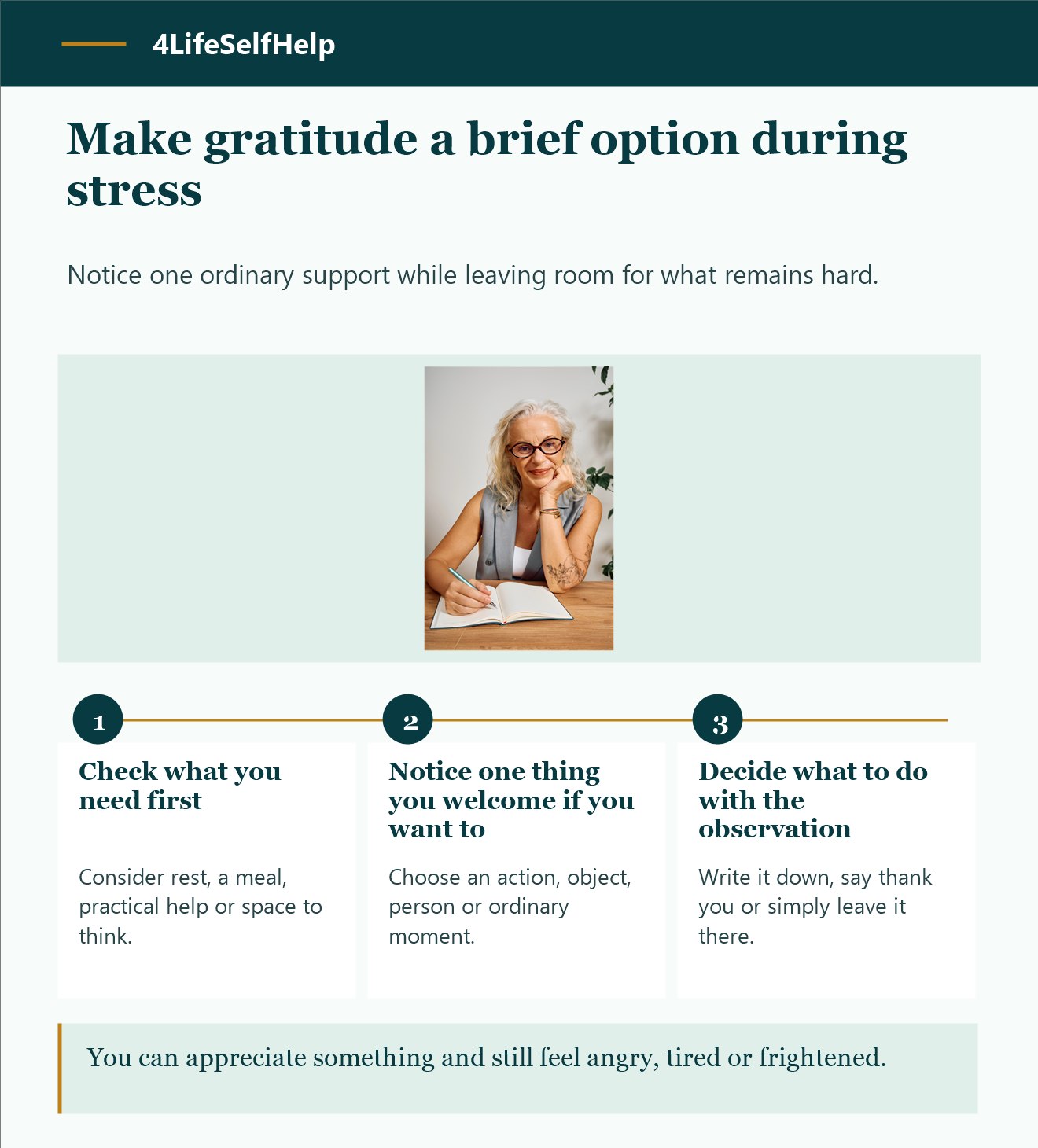
Make gratitude a brief option during stress
Notice one ordinary support while leaving room for what remains hard.
- Check what you need first Consider rest, a meal, practical help or space to think.
- Notice one thing you welcome if you want to Choose an action, object, person or ordinary moment.
- Decide what to do with the observation Write it down, say thank you or simply leave it there.
You can appreciate something and still feel angry, tired or frightened.