
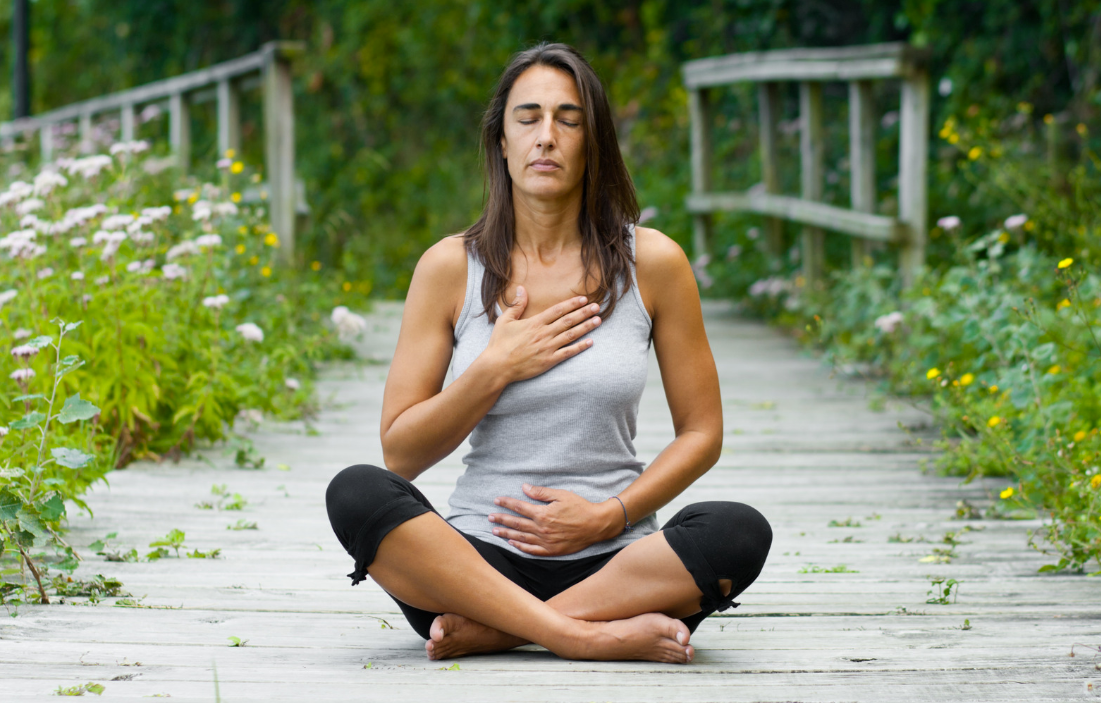
A morning meditation can be a small pause before the day gathers speed. You might notice your surroundings, feel the support beneath you or choose one manageable next step. You do not have to wake up cheerful, empty your mind or earn a calm morning by doing the exercise perfectly.
Try a minute if that is what fits. A disrupted night, caring responsibilities or an early shift may leave little room for a routine. Meditation is an option alongside practical care, rather than another demand on your time.
On this page
What a morning practice can offer
Mindfulness means paying attention to what is happening now with less judgment. In a morning practice, that might mean noticing a sound or acknowledging, “I am worried about today.” Thoughts can keep appearing. Returning your attention gently is part of the exercise; a blank mind is not the goal.
A pause may help you notice that you need breakfast, rest, a clearer plan or someone else’s help. It does not replace sleep or guarantee energy. If mornings regularly feel unmanageable, consider the conditions around them as well as the routine itself.
Choose an anchor that feels comfortable
An anchor is something you return your attention to. Choose a nearby object, ordinary sounds or the contact between your feet and the floor. If following your breathing feels comfortable, notice its usual rhythm without forcing deeper breaths, holding your breath or trying to create a special sound.
You can keep your eyes open and look gently at a wall or a plant. Some people prefer imagining a soft light; others find an actual object easier. Neither choice is more advanced or spiritually meaningful than the other.
A short phrase is another option: “I can take one step at a time.” Choose words you can believe today. You need not repeat positive statements that clash with how you feel. For more examples, see Self-Trust and Affirmations: Realistic Words, Practical Follow-Through.
Try a brief morning sequence
- Get comfortable. Sit with support, stand safely or use another position that suits your body. There is no required pose.
- Notice where you are. Look around and name a few ordinary things you can see. Let yourself settle without demanding a particular feeling.
- Choose one anchor. Spend a few moments with a sound, an object or the feeling of support beneath you.
- Return gently. When your attention moves to plans or worries, acknowledge that and return to the anchor if you want to.
- Choose what comes next. Finish with a practical action, such as getting dressed, eating or checking today’s first appointment.
You can stop after a few moments. A quiet timer is optional, and missing a day creates no debt to make up. If you become dizzy, distressed or uncomfortable, stop, orient yourself to the room and choose a different activity. You do not need to push through.
Adapt the practice to today’s needs
When attention keeps moving: make the exercise smaller. Notice one sound, then continue your morning. Checking your phone or losing your place does not mean you failed.
When you feel stressed: ask what the stress is asking you to address. A pause can sit alongside asking for help, changing a deadline or making a safer plan. You do not have to become calm before acting.
When the day feels overloaded: choose one necessary task and identify what can wait. Meditation cannot create extra hours or remove an unreasonable workload.
When sleep has been difficult: avoid sacrificing more sleep to maintain a morning ritual. Persistent sleep problems or fatigue deserve attention beyond a meditation habit.
When you want insight: write one sentence about what you noticed. Treat an impression as something to explore, rather than proof about another person’s intentions or the future.
When a decision is waiting: separate what you know, what you still need to find out and the next reversible step. Feeling clearer is useful, but relevant facts still matter.
When you want to be kinder: try one specific action, including toward yourself. Kindness can include a limit, a repair or a request for support.
Review what helps and seek support
After a few mornings, ask whether this pause feels useful, neutral or harder than expected. Shorten it, move it to another time or leave it out. The NCCIH guide to meditation and mindfulness explains that benefits vary, research has limits and some people experience unwanted effects.
Meditation should not replace or delay health care. Ongoing distress, sleep difficulties or concerns such as high blood pressure deserve appropriate professional attention. You can bring a spiritual meaning to your practice while also getting practical help.